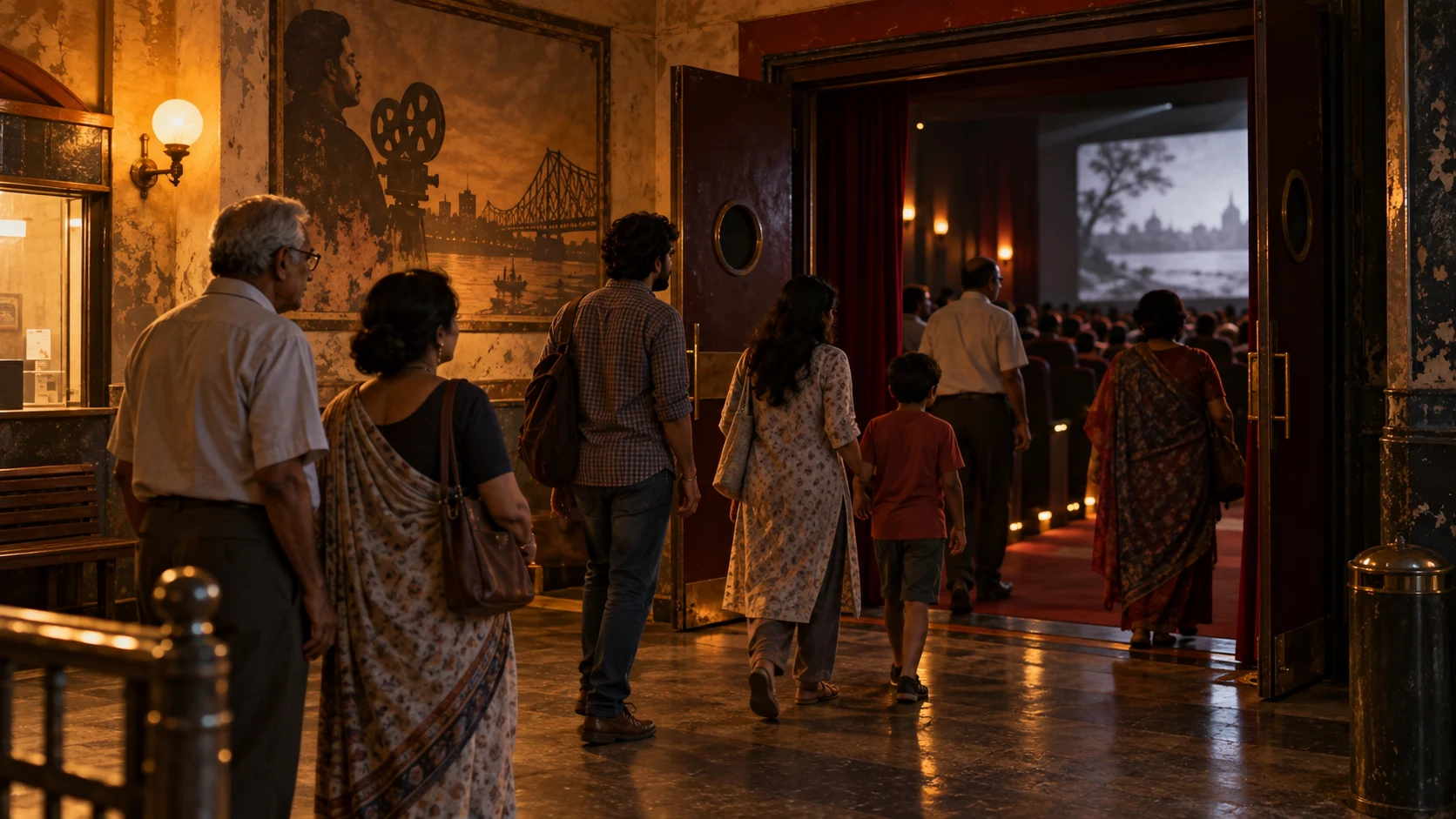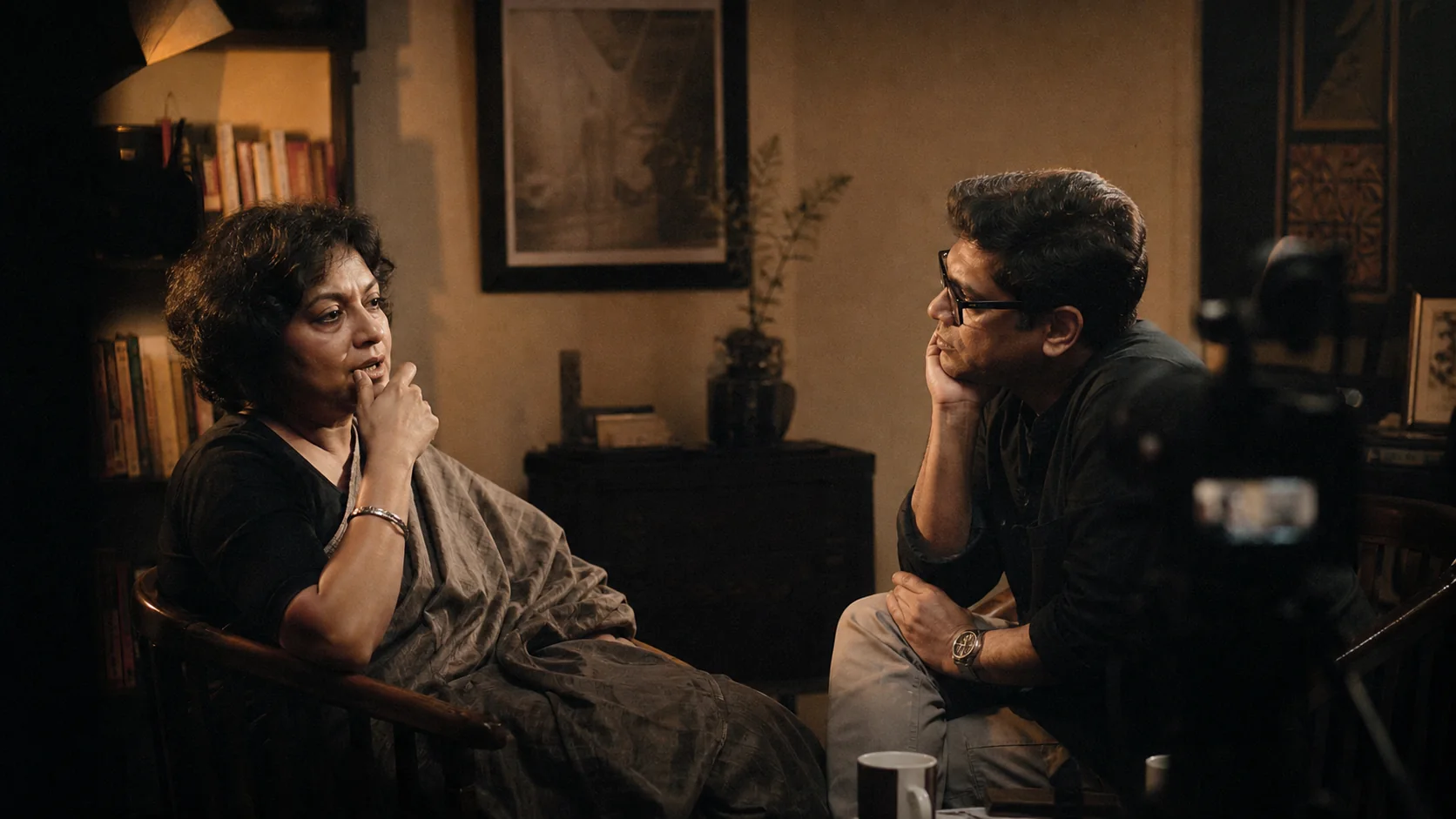
Soul Connection · Theatre · Resilience
Only two people came. The play still began. What do empty seats reveal about an artist?
Soumya Mukherjee’s near-empty Delhi shows offer a practical way to separate commercial feedback from artistic worth, and motivation from dependable craft.
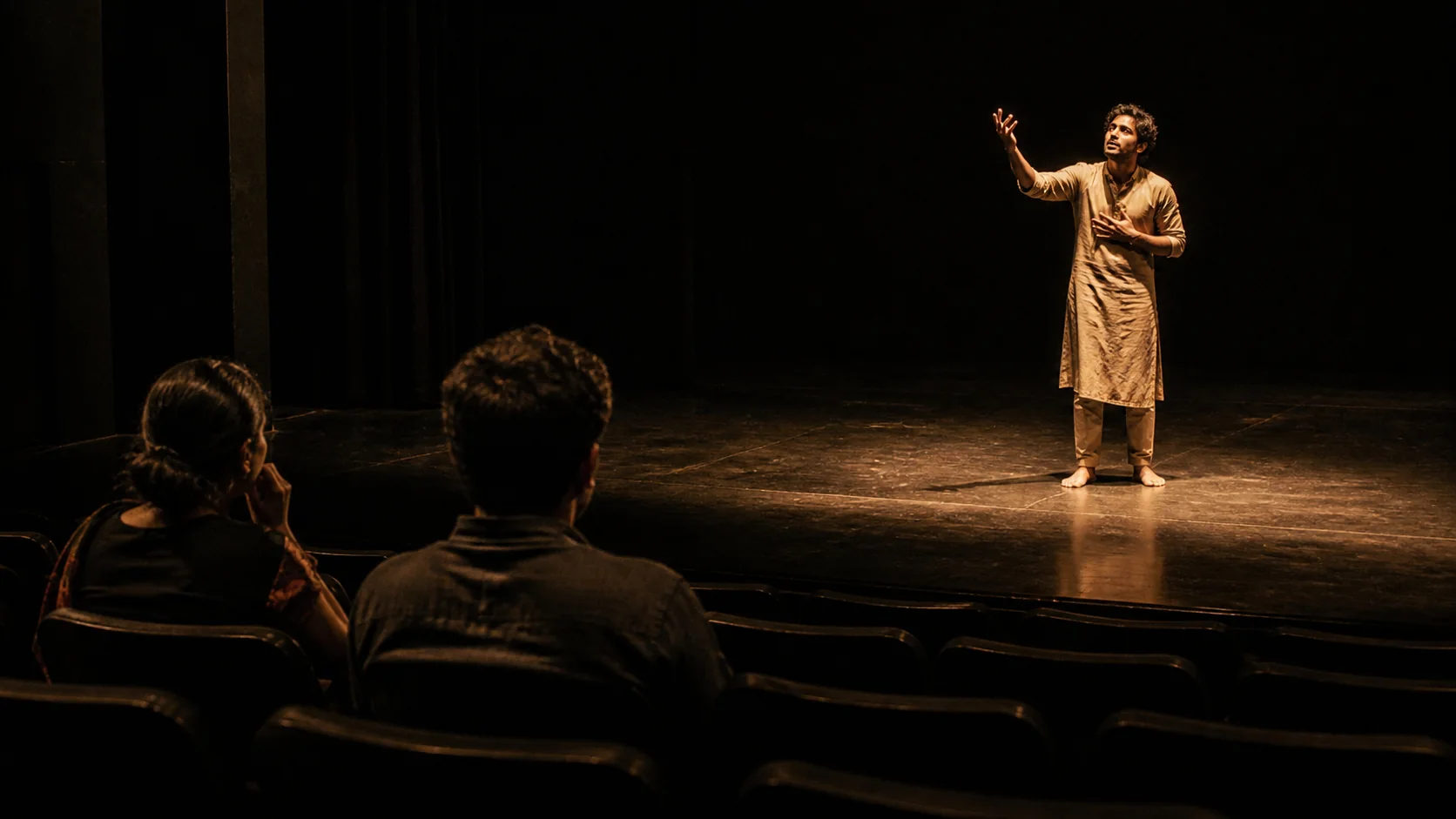
Two people are seated; does the performance still begin?
At one Delhi performance, actor Soumya Mukherjee looked out and found two people in the audience. At another show in the same city there were five, until the company seated a musician from a different production as a sixth. The room ran on donations. The troupe quietly handed that musician five hundred rupees so that he could make the first contribution and perhaps encourage everyone else. It is a funny story only because enough time has passed. Inside the evening, it carried embarrassment, money trouble and the suspicion that the work might not matter to anyone.
This is the scene I kept returning to after the Soul Connection conversation ended. The episode travels through Soumya’s childhood obsession with cricket, school theatre, first love, parents, auditions, cinema, Anjan Dutt, craft and the anxiety of an uncertain profession. Yet the nearly empty theatre gathers those subjects into one hard question. When the public result is visibly poor, what exactly is the performer still responsible for? The useful answer cannot be that numbers never matter. A company has travel bills, rent, wages, publicity costs and future choices. It also cannot be that a weak turnout has already measured the value of every rehearsal and every person on stage.
Three ledgers for reading a small audience
Record turnout, reach, venue, timing and access without turning the numbers into a story about your worth.
Give the people in the room a complete voice, body, rhythm and quality of attention.
Choose one production change and one craft change instead of making a permanent verdict from one night.
Cricket ended, but the education in losing travelled into theatre
Soumya did not grow up planning to become an actor. Cricket was the serious ambition. He trained, followed the game with unusual intensity and once missed school to watch at Eden Gardens. Theatre entered through a teacher who connected literature with film and performance. A school musical led to rehearsals before classes and after the school day. The timetable eventually made serious cricket and serious theatre impossible to hold together. He chose the stage, but retained the player’s understanding that commitment is measured through repeated actions rather than the drama of one occasion.
The rehearsal history protects the empty-house story from becoming a miracle of sudden bravery. His body already knew how to arrive before the reward was visible. The group entered competitions and made a dark comedy about the public exploitation of a farmer’s death. Chandan Sen saw the work and encouraged them. Enjoyment and seriousness were not opposites. The young actors could give many hours because the process was alive to them, not because anyone had guaranteed a career.
Sport does not automatically teach people to lose well. Defeat can also produce blame, denial and fear. Learning occurs when a result can be broken into parts. Which decision failed? Which ability needs work? What lay outside anyone’s control? The Delhi turnout becomes useful in the same way. It is evidence, not a character certificate. Courage does not erase the evidence. It refuses to let one result write the performer’s entire identity.
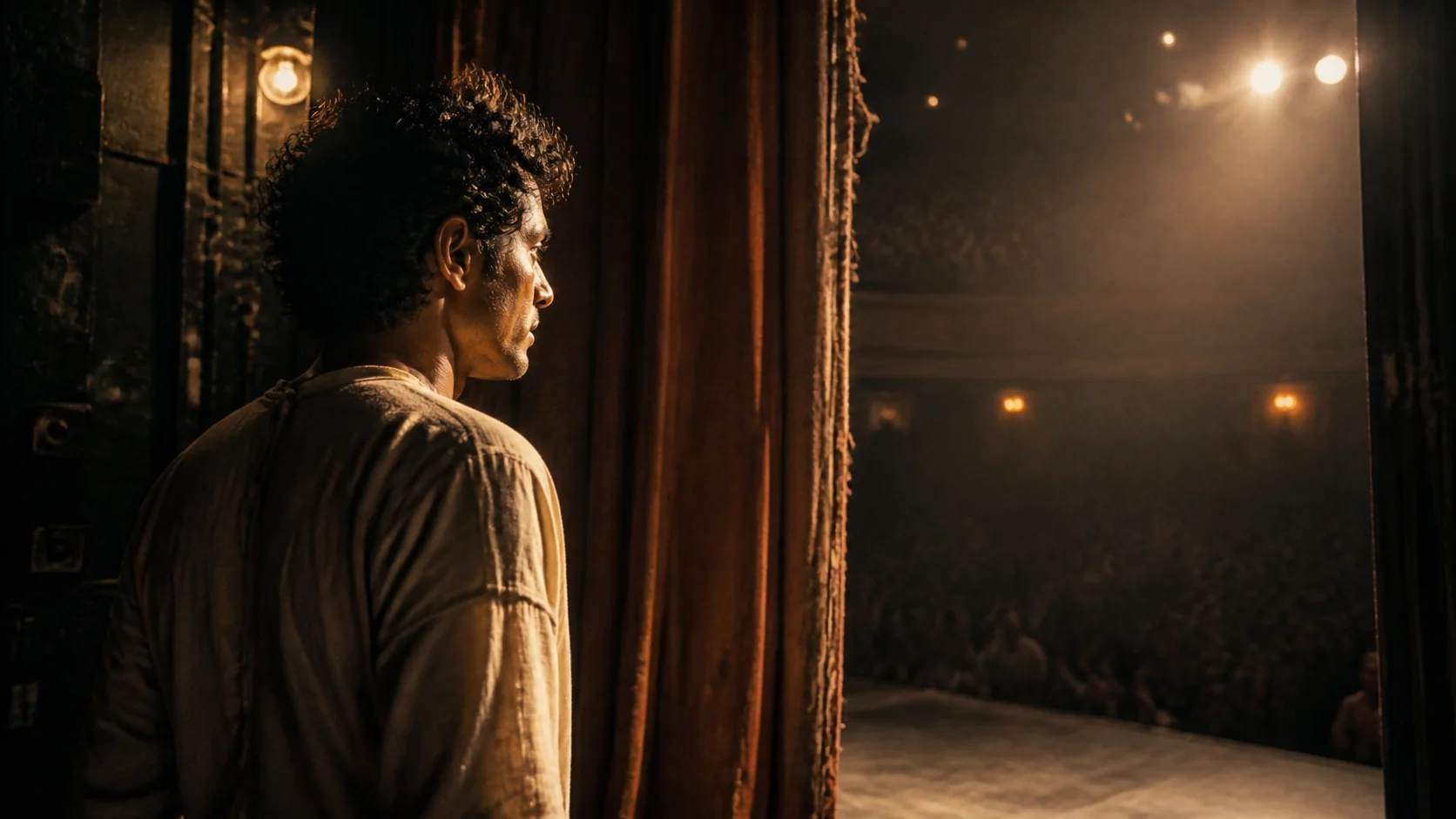
Skill is what appears when importance and inspiration do not
Late in the conversation, Soumya argues that an actor cannot organise consistency around motivation. If one coveted character receives total commitment while a less prestigious role receives leftovers, the performer has surrendered craft to status. His cricket comparison is exact. A batter facing extreme pace cannot listen to an inspiring message and then decide where to place the foot. Practice has to make perception and response available inside a fraction of a second. A set imposes a similar compression through camera angle, partner, line, schedule and technical limits.
Discipline can also be romanticised. Exhaustion is not always laziness. An unsafe set, withheld payment or an exploitative schedule cannot be cured by demanding more passion from the artist. Professionalism requires a boundary between the actor’s preparation and the producer’s responsibility. Otherwise the most committed person becomes the free resource that protects everyone else from the cost of bad planning.
Within that boundary, routine is more dependable than emotional intensity. A fixed hour of rehearsal, one scene objective, a short voice practice or a rule against checking views before the work is complete can carry a person through an unremarkable day. Skill is not only the capacity to be excellent. It is the capacity to make the next truthful decision when the room does not make you feel important.
Confidence can begin with an admitted gap in knowledge
Soumya offers an inversion of the usual confidence story. Confidence does not come only from knowing more. It can arrive when a performer accepts what he does not know. Acting changes with the culture around it. A style of screen banter that appeared current ten years ago may now feel performed and dated. Camera grammar, rhythm and audience habits keep moving. An earlier success cannot answer today’s scene on the actor’s behalf.
His account of Kharaj Mukherjee’s dubbing gives this idea a human scale. After completing his own work, the senior actor left a precise instruction that Soumya should record three decibels lower and avoid showing off. Soumya also remembers watching Kharaj match lip, pause and performance with astonishing control. Admiration did not have to become inferiority. It identified an exact frontier of learning.
The final discussion of vulnerability connects that frontier to performance. An actor who labels a scene “angry” or “sad” before entering it may arrive wearing the result. The character then has no space to alter him. Remaining slightly unstable, like water on a leaf, is not the absence of technique. It is technique without a sealed conclusion. After an empty hall, the same openness matters. The result is real, but the next encounter may still require the artist to become different. This is why learning and resilience cannot be separated. Resilience without learning repeats the same mistake with more stamina; learning without resilience ends before the new choice has time to become a skill.
Small numbers, stage duty and a mistaken idea of courage
Soumya’s way into performance was not a story of instant destiny. Cricket came first. He trained seriously, followed the game obsessively and still thinks through its grammar. A schoolteacher who taught literature through cinema drew him into a musical. Rehearsals began around six thirty in the morning before classes and resumed after school. Tuition money sometimes went toward theatre. A group of young people made work because the process itself had become absorbing long before anyone could promise them a professional future. That history matters because the two-person show did not meet an actor who had learned to work only under applause. It met a body already educated by repetition, teams and losing.
Sport also gave Soumya a distinction that the conversation returns to later. Motivation and skill are not the same thing. A player in a World Cup final may feel more emotion than in a league game, but the ball still arrives too quickly for inspiration to manufacture technique. Training must have placed the response inside the body. Acting under production pressure is similar. The camera, angle, line, partner and schedule do not pause until the performer feels significant. Skill is what remains available when excitement, recognition and confidence are unreliable.
Who the actor performs for among the empty chairs
That distinction has become sharper in a culture where creators can watch numbers move every minute. A low view count is a digital empty seat. The number may reveal a weak headline, poor distribution, wrong timing, limited access, an exhausted audience or a piece that simply did not connect. It deserves investigation. But a metric combines too many causes to function as a final judgment of craft. The practical task is to separate the ledgers: what happened to the release, what happened inside the work, and what will be changed next. Without that separation, analysis becomes shame and shame pretends to be accuracy.
The two spectators do not prove that every struggling show deserves to continue. Nor do they become sacred merely because they are few. They restore scale. Theatre is not performed for the category called “audience”; it is performed in front of particular bodies sharing one stretch of time. Commercial survival asks whether enough people came. Artistic responsibility asks what was offered to the people who did. A durable creative life has to answer both without allowing either answer to swallow the other.
Specific takeaways
- 01
After a weak turnout, keep separate ledgers for facts, craft and self-worth.
- 02
Do not turn one event into a verdict; examine venue, timing, promotion, access and the work itself.
- 03
Once a performance begins, treat each person present as a complete audience member.
- 04
Build one repeatable routine that remains available when motivation does not.
- 05
Do not subsidise production failure with your professionalism; define boundaries before the crisis.
- 06
Review metrics at set times so refreshing numbers does not direct the creative day.
- 07
Take one packaging decision and one craft decision from every release.
- 08
Make not-knowing part of confidence by naming the gap and seeking precise feedback.
Questions for your own life
- After your last weak response, which fact about the release did you mistake for a fact about your worth?
- Which part of your craft remains dependable without inspiration?
- Which production failure are you silently carrying in the name of professionalism?
- What one packaging change and one craft change will you make next?
- What would full attention look like in your work if only two people were present?
Only two people came. The play still began. What do empty seats reveal about an artist?
Watch the complete episode ↗
Arunava Khasnobis
In Soul Connection, Arunava looks at people, art, relationships, failure, moral tension and inner life through conversation. His essays are not episode summaries; they are honest returns to what was heard, tested against his own questions, experience and unfinished understanding.
CONTINUE READING