Soul Connection · People · Parenting
When every mistake becomes a verdict, what happens to a child’s curiosity?
A practical lens for separating guidance from constant judgment, so that children can learn from mistakes without learning to distrust their own minds.

The mistake is small, but the verdict fills the room
A child chooses a shirt that an adult dislikes. The reply arrives before the child has even buttoned it: “What kind of choice is that?” On another day the child scores five out of twenty, and a second sentence follows: “Mathematics is clearly not for you.” Neither sentence looks like a major act of cruelty. Both may even be spoken by an anxious parent who is trying to help. Yet the room has quietly changed. A decision has become a diagnosis.
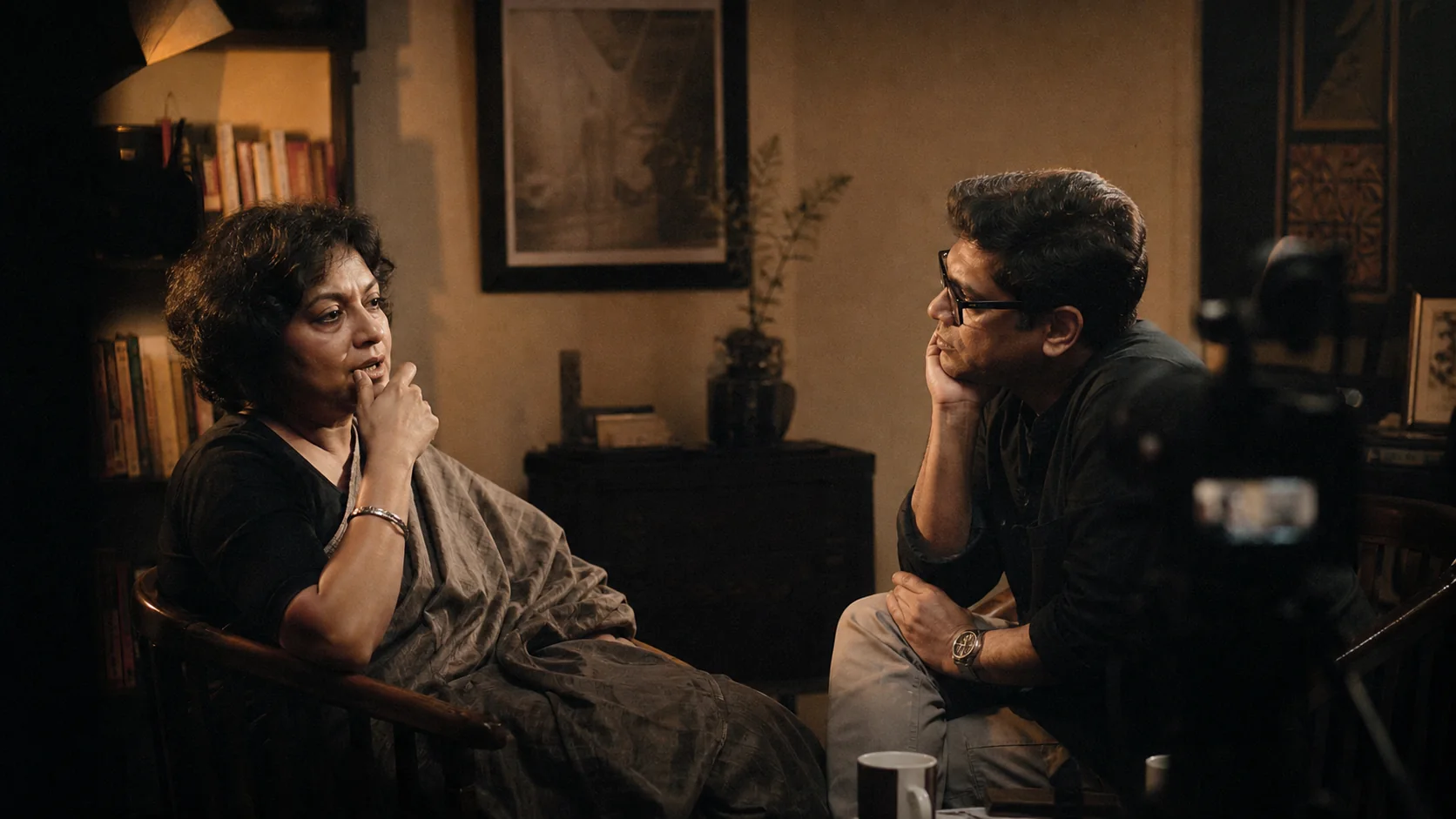
In the Soul Connection conversation with Dr. Debajyoti Kar, this ordinary movement from correction to judgment becomes the central parenting problem. Kar works with students preparing for competitive examinations, and he describes what repeated verdicts can do: a child begins to connect separate choices into one conclusion, “Everything I choose is wrong.” His claim is not that adults should approve every preference or ignore every weak result. It is that relentless judgment can make the child distrust the very mind that learning requires.
Three moves that keep learning alive
Before correcting the mistake, ask the child to show the route that produced it.
Keep one result separate from a judgment about ability, character or future.
Create another attempt through play, retrieval, practice and conversation.
Five out of twenty is information, not an identity
A score of five out of twenty contains several possible stories. A concept may be missing. Practice may have been shallow. Attention may have fractured. The wording may have confused the student. The child may simply have had a bad day. A useful review tries to discover which story is true. A verdict such as “you are bad at mathematics” removes that investigation and replaces it with identity. The next problem now carries two burdens: the mathematics itself and the child’s expectation of personal failure.
Kar advocates positive reinforcement when discussing how students respond to setbacks. That phrase is easily flattened into praise, but indiscriminate praise is not the alternative to judgment. Calling a wrong answer correct protects neither competence nor confidence. A more demanding response is to ask where the reasoning changed direction, what the student still remembers, and what one controllable action comes next. The point is to return the child to the work. Correction remains; humiliation is no longer the fuel.
Parental anxiety cannot be edited out of this scene. Limited seats, expensive preparation and uncertain employment are real. A low score can matter. But the fact that fear has a rational source does not make every fear-driven intervention useful. Constant verdicts may increase short-term compliance while teaching a child to avoid tasks in which failure is visible. The grade sheet can register improvement without showing that curiosity has narrowed.
Studies of parental autonomy support offer a useful clue, but not a magic rule. Recent work with adolescents has found relationships among perceived autonomy support, psychological need satisfaction, self-control and motivation; longitudinal research in a Chinese sample has also traced a path from parents’ self-development goals through autonomy support to later academic motivation. These findings depend on particular samples and measures, and they cannot tell one family exactly what to do on a difficult evening. Their value lies in the distinction they preserve: agency does not require the absence of standards, while control can damage motivation even when the stated goal is achievement.
The playground teaches what a perfect record cannot
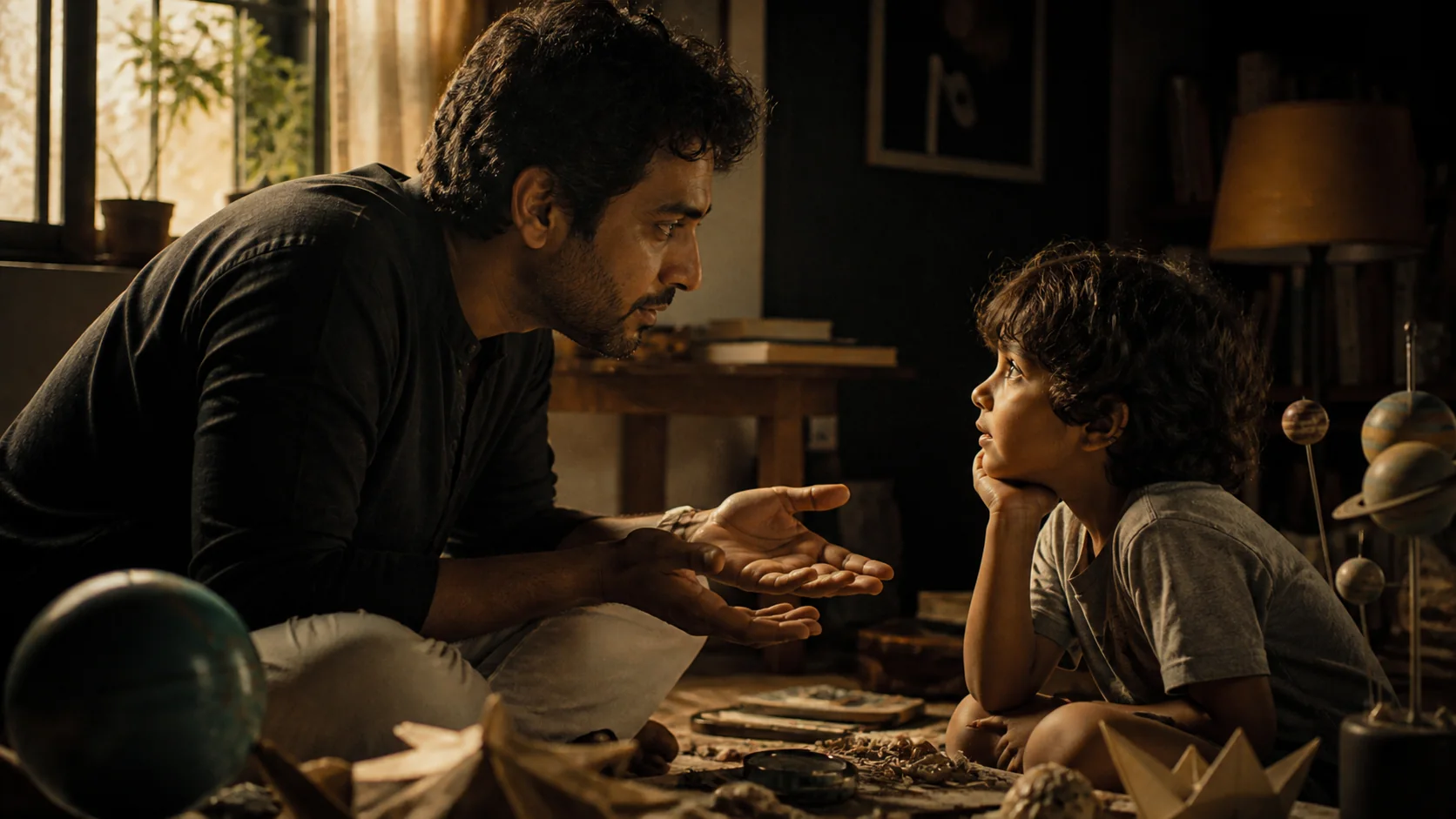
One of the strongest turns in the episode is Kar’s insistence that children need to play. His argument is not confined to exercise. In a game, a child loses and returns, recognises skill on the opposing side, negotiates with teammates and discovers that today’s result does not settle tomorrow. Failure is public but temporary. It belongs to the game rather than becoming a permanent description of the player.
The American Academy of Pediatrics links developmentally appropriate play with language, self-regulation, social relationships, problem solving and executive function. Its clinical report concentrates particularly on younger children and should not be treated as a universal formula for every age or household. It nevertheless supports a larger point: play is not merely time stolen from learning. It is a form of learning in which risk, cooperation and recovery cannot be fully scripted by an adult.
Access complicates the recommendation. Many children do not have a safe field, free afternoons or inclusive sports. Disability, neighbourhood safety and school schedules matter. The deeper requirement is therefore not one specific game. Collaborative indoor play, theatre, music ensembles and age-appropriate unstructured activity can also create situations in which outcomes are uncertain and other people must be read. The question is whether every activity has become another adult-managed performance project.
In the AI classroom, access can imitate understanding
Kar describes a student who received extensive explanations from AI systems but could not begin a similar problem during an examination. He uses the example to distinguish access from execution. A visible solution can feel clear because every bridge has already been built. When the screen disappears, the learner must identify the first question, retrieve prior knowledge, test a route and notice an error. Those actions are not decorative steps around learning. They are the learning.
Evidence reviews on study techniques have consistently given strong support to practice testing and distributed practice. That does not turn every AI session into a threat. A tool can generate examples, compare explanations and respond to a precise doubt. The decisive question comes afterwards: can the student close the answer and reconstruct the idea, solve a changed problem, or explain where the reasoning failed? If the answer ends thinking, the tool can create dependency. If it begins a fresh attempt, it can become a scaffold.
UNESCO’s guidance on generative AI in education stresses age-appropriate, human-centred use, privacy and the protection of human capacity. At home, that means resisting two easy extremes. Completing prompts, choosing answers and polishing assignments for the child may improve the output while transferring ownership away from the learner. Banning the technology entirely prepares the child for a world that does not exist. Supervised experimentation is harder: ask what the tool supplied, how the claim was checked, what the learner rebuilt independently and where human feedback remained necessary.
What autonomy can mean without abandoning boundaries
There is an important counterargument. Children need limits, routines and correction. A parent cannot treat safety, sleep, money, honesty and school commitments as matters of unrestricted personal choice. Families also live with real economic uncertainty. Competitive examinations have limited seats, tuition can be expensive, and an academic setback may carry consequences. Advice that simply tells parents to “stop pressuring children” can sound morally elegant because it avoids the weight that parents are actually carrying.
The useful distinction is not freedom versus discipline. It is structure versus psychological control. Structure makes expectations visible, connects a rule to a reason and leaves a route back after failure. Psychological control turns affection, shame or identity into enforcement: the result is not merely “this answer is wrong” but “you are the sort of child who always gets things wrong.” Research on autonomy-supportive parenting is not a universal recipe, and much of it relies on self-report and specific cultural samples. Still, studies repeatedly make a relevant distinction: support for agency can coexist with demanding work, while intrusive control can weaken autonomous motivation.
A different conversation after the next wrong answer
The same distinction matters in an AI-saturated study environment. An answer is now easier to obtain than ever. Kar argues that access is not execution: a long solution from an AI system can produce the feeling of understanding without the learner being able to reconstruct the first step later. His conclusion should be treated as an educator’s observation, not a verdict on every tool. Generative AI can explain, compare and offer practice. But if it removes the moment in which a student must retrieve, attempt, fail and revise, it may save time while weakening ownership of the learning.
This conversation therefore leaves a more difficult task than “encourage curiosity.” Curiosity needs a relationship in which a wrong answer does not end the conversation, a practice in which effort has a next step, and a household that can say no without turning the no into a judgment on the child’s whole self. The question for a parent is not whether correction is necessary. It is whether correction still leaves the child able to return with another question.
Specific takeaways
- 01
Discuss the specific result without turning it into a forecast of the child’s whole future.
- 02
Before correcting a choice, ask the child to describe the reasoning that produced it.
- 03
Protect time for play and collaborative activity as development, not merely as a reward after study.
- 04
Use small commitments and task goals when motivation is low instead of measuring effort only by hours.
- 05
After an AI or video explanation, close the screen and require retrieval, explanation and a changed problem.
- 06
Explain the reason for a boundary and keep the route back after failure visible.
- 07
Let children see adults say “I do not know,” check a source and revise an opinion.
Questions for your own life
- Which kind of mistake most quickly becomes a verdict about identity in your home?
- When your child last asked an uncomfortable question, did you answer it or discourage the act of asking?
- Where in the week can your child act without a score, a fixed outcome or constant adult approval?
- What simple check would reveal whether an AI explanation became retrievable knowledge?
When every mistake becomes a verdict, what happens to a child’s curiosity?
Watch the complete episode ↗- Soul Connection Podcast · Dr. Debajyoti Kar on study, parenting, play, attention and AI ↗
- American Academy of Pediatrics · The Power of Play ↗
- PubMed · Academic motivation in adolescents and parental autonomy support ↗
- PubMed · Parents’ self-development goals, autonomy support and adolescents’ academic motivation ↗
- Psychological Science in the Public Interest · Improving Students’ Learning With Effective Learning Techniques ↗
- UNESCO · Guidance for generative AI in education and research ↗

Arunava Khasnobis
In Soul Connection, Arunava looks at people, art, relationships, failure, moral tension and inner life through conversation. His essays are not episode summaries; they are honest returns to what was heard, tested against his own questions, experience and unfinished understanding.
CONTINUE READING