Soul Connection · Epic · Politics
Shakuni’s most dangerous weapon was not the dice
He did not create the wound; he gave it a plan, an enemy and a shortcut. How manipulation shrinks agency—and how an entire court helps it succeed.
Revenge began long before the dice were thrown
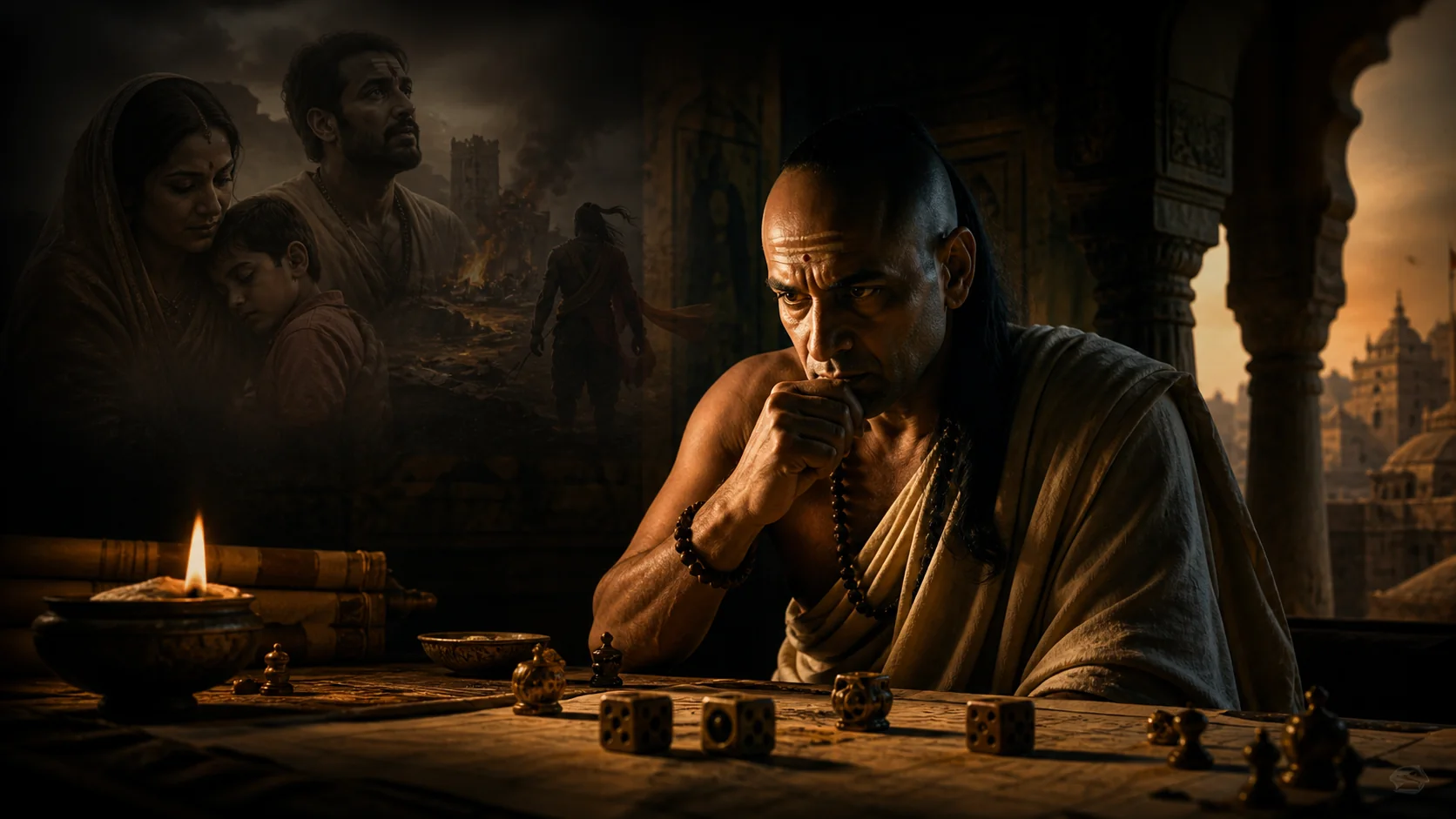
Dice make a small sound in a large hall. They roll, strike the floor and stop. Yet after that brief movement, wealth, territory, brothers, freedom and a woman's dignity become items in an escalating wager. Shakuni's most dangerous weapon is therefore not the object in his hand. It is his ability to read the room. He understands that Yudhishthira will struggle to refuse a challenge, that Duryodhana's envy can be made to burn hotter, that Dhritarashtra will bend under a son's threat, and that the elders' moral discomfort may remain trapped in silence. Before armies are arranged on a field, Shakuni arranges human vulnerabilities around a table.
Popular retellings give Shakuni several origin stories: imprisonment, starvation, dice made from a father's bones, or a long family vow of revenge. This essay does not treat those details as established facts of the passages it uses. Its primary narrative comes from the Sabha and Shalya books in Kisari Mohan Ganguli's translation. There Shakuni is most clearly known through action. He sees Duryodhana's burning envy, identifies Yudhishthira's weakness for a game he does not master, promises to win by deception, escalates the stakes, and later dies as a major architect of Kuru policy. Motive remains open to interpretation. Method and consequence are far less obscure.
How a private wound becomes a public disaster
Humiliation or dispossession can be real; denying the wound prevents understanding.
Shakuni reads rules and weaknesses with precision; intelligence itself is not the verdict.
Duryodhana, Dhritarashtra and the silent court each open a door the plan requires.
A revenge declared in the family’s name eventually turns the family into its instruments.
From envy to design: Shakuni does not create the wound, but gives it a road map
Duryodhana's distress at the splendour of the Maya assembly is not manufactured by Shakuni. In the Sabha Parva, Duryodhana describes the Pandavas' prosperity as a fire in his own mind. His agency begins there. He is not merely an innocent young man hypnotised by an uncle. He reads another family's success as an intolerable reduction of himself. Shakuni does not challenge that reading. He does not separate dispossession from comparison, political concern from status injury, or justice from the desire to stand above a rival. Instead, he converts heat into procedure. The Pandavas are difficult to defeat in open battle, but Yudhishthira can be summoned into a game he loves and does not master.
Manipulation rarely needs to invent a desire from nothing. It gives an existing injury a total explanation: your pain has one enemy, that enemy's prosperity is your humiliation, and deliberation is merely delay. The sequence moves from grievance to a face and then to a shortcut. This is why a clever adviser can reduce rather than expand a leader's freedom. Duryodhana had choices—negotiation, a shared political order, achievement independent of the Pandavas, even the difficult work of examining envy. Shakuni offers the narcotic clarity of a single move. Win the kingdom at dice and the wound will close. Yet another person's ruin cannot cure insecurity; it can only prepare insecurity to need another target.
The dice table: when intelligence turns the language of rules into a trap
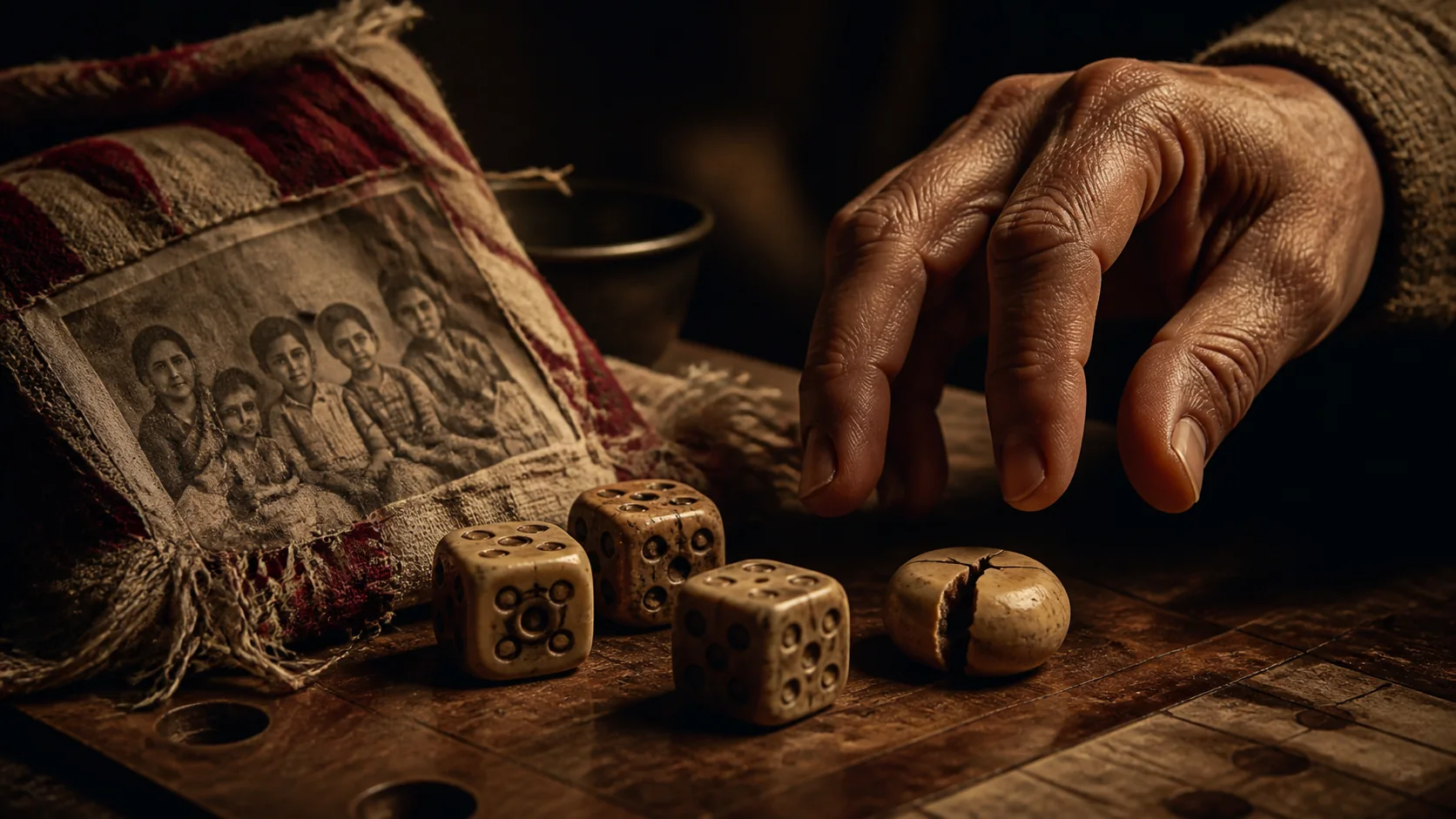
Shakuni does not hide his competence. He compares betting to a bow, dice to arrows and the board to a chariot. The table is his battlefield. When Yudhishthira objects to deceitful gambling, Shakuni offers a dangerous philosophy of competition: the skilled defeat the unskilled, just as the strong meet the weak, and victory is the purpose of the contest. The argument contains enough truth to be persuasive. Unequal ability exists in every competition. But inequality of skill does not erase meaningful consent, fair limits or personhood. A novice may lose a chess match; that does not make his freedom, brothers or wife legitimate extensions of the stake.
Shakuni's brilliance lies in escalation. The losing player is never allowed a rational stopping point. One loss is covered by the promise that a more precious stake might recover everything. Shame, excitement and sunk cost begin to work together. Still, Yudhishthira's responsibility remains visible. Being targeted by deception does not turn every decision into an act without agency. The epic demands an uncomfortable double vision: exploitative design and self-destructive participation can both be true. Naming the participant's error does not absolve the designer. Naming the design does not erase the participant's duty. Without both truths, ethical analysis collapses into a contest over who deserves the simpler label.
A crowded court: how the single-villain story protects institutions from scrutiny
The dice plan may begin as a conversation, but it succeeds inside a public institution. Dhritarashtra knows the danger, invokes Vidura's counsel and anticipates war; then he authorises the hall under pressure from his son. Knowledge and authority are present, but decision moves against both. As Draupadi becomes a stake, elders perspire, lower their heads or grieve. Vikarna asks the necessary legal and moral question: after Yudhishthira has lost himself, what authority remains to wager her? Most of the assembly does not answer. Silence is not a neutral background here. It is part of the machinery that allows the next command to be carried out.
The Shalya Parva later describes Shakuni as a root of the Kurus' evil policy, and the description captures his enormous influence. Yet a root does not become a tree without soil, water and protection. Ambition, parental indulgence, fear, loyalty and career-preserving silence feed the policy. A manipulator gains disproportionate power when gatekeepers can say, “I disapprove, but I will not stop it.” Moral discomfort that changes no procedure, protects no vulnerable person and imposes no limit on authority is private cleanliness, not public ethics. Shakuni's story is therefore also the story of a court in which many recognised danger while too few were willing to make resistance cost them something.
Shakuni's intelligence did not act alone
The earlier short essay held an important intuition: Shakuni's politics is the method of revenge. A fuller reading adds another layer. Revenge is not a one-man project; it is a network. Shakuni designs, Duryodhana desires, Dhritarashtra permits, most of the court watches, Yudhishthira continues to play, and Draupadi with many others carries the cost. Blaming only Shakuni makes that network disappear. Using the network to dissolve his agency would be equally false. Responsibility can be distributed without being cancelled. The epic's moral complexity lies partly in this fact: one man's strategy is terrible, but it works because several doors are opened from the inside.
There is a serious counterargument. Politics cannot always remain gentle. If the opponent is stronger, the rules favour the powerful and direct conflict promises defeat, asymmetric strategy may be necessary. Intelligence is supposed to identify an adversary's vulnerable point. The demand for “fairness” can itself protect structural advantage by forcing weaker actors to compete on the strong side's preferred ground. Seen this way, calling Shakuni a villain rather than a strategist may look like a story told by those who eventually won. This objection matters. Condemning every unconventional method would turn ethics into a defence of the status quo.
Is recognising the move enough to stop the game?
The answer is not to prohibit secrecy, surprise or misdirection in every struggle. It is to examine purpose, consent and limit. A weaker community may use unconventional strategy to stop imminent harm or gain a hearing denied by ordinary channels. At the dice table, however, the aim is seizure rather than protection; vulnerability is exploited until people themselves become property-like stakes; the outcome does not prevent bloodshed but creates humiliation and exile that make war more likely. The problem is not dice instead of swords. It is the conversion of persons into means. A plan measured by how completely it breaks another person's agency may display tactical intelligence, but it does not yet deserve the name political wisdom. Wisdom sees the society that must exist after the move.
When Shakuni dies, the dice stop, but the logic he helped build has already entered thousands of lives. Revenge promises that one enemy's destruction will settle the account. In practice, the machine requires new stakes: first wealth, then relationships, then the future. Shakuni's intelligence was not small. His horizon was. He could see the next move but not the next world. The useful question for the present is therefore not only, “Who is our Shakuni?” It is harder and more democratic: which wound are we allowing to become our entire identity, which shortcut are we applauding as cleverness, and whose humanity disappears when our side's grievance becomes the only permitted truth? Strategy proves its worth not simply by winning, but by refusing to wager the future in order to do so.
Specific takeaways
- 01
Shakuni does not create Duryodhana's envy; he gives it a plan and a justification, so their separate forms of agency must remain visible.
- 02
Popular origin stories and the epic passages used here are not interchangeable; responsible interpretation keeps that source boundary explicit.
- 03
Unequal skill does not by itself make a contest unjust, but strategy becomes exploitation when consent and personhood are turned into expendable limits.
- 04
Yudhishthira's self-destructive participation and Shakuni's predatory design can both be true; neither cancels the other's responsibility.
- 05
Dhritarashtra's permission and the court's silence show that a manipulator's power is often constructed from institutional consent.
- 06
A wounded past can explain conduct without acquitting it; pain can be recognised while another person’s agency is still protected.
- 07
Political intelligence must judge not only the next move, but the people, relationships and institutions that will exist if the move succeeds.
Questions for your own life
- Does the person who gives language to my wound expand my choices, or divide the world into friends and enemies?
- When I applaud a clever shortcut, whose consent or dignity am I quietly treating as expendable?
- If I recognise wrongdoing inside an institution but remain silent, does my silence become part of the plan's infrastructure?
- If the victory I am planning succeeds, will my relationships and future become freer, or will revenge require another target?
- Sondesh.tv · Original short essay archive ↗
- Mahabharata, Sabha Parva, Section XLVII · Shakuni identifies the dice strategy ↗
- Mahabharata, Sabha Parva, Section XLVIII · Duryodhana, deception and Dhritarashtra’s permission ↗
- Mahabharata, Sabha Parva, Section LV · betting as bow and dice as arrows ↗
- Mahabharata, Sabha Parva, Section LVIII · Yudhishthira and Shakuni debate deceit ↗
- Mahabharata, Sabha Parva, Section LXIV · the escalation of stakes ↗
- Mahabharata, Sabha Parva, Section LXVII · Vikarna challenges the silent court ↗
- Mahabharata, Shalya Parva, Section 28 · Sahadeva and Shakuni’s fall ↗
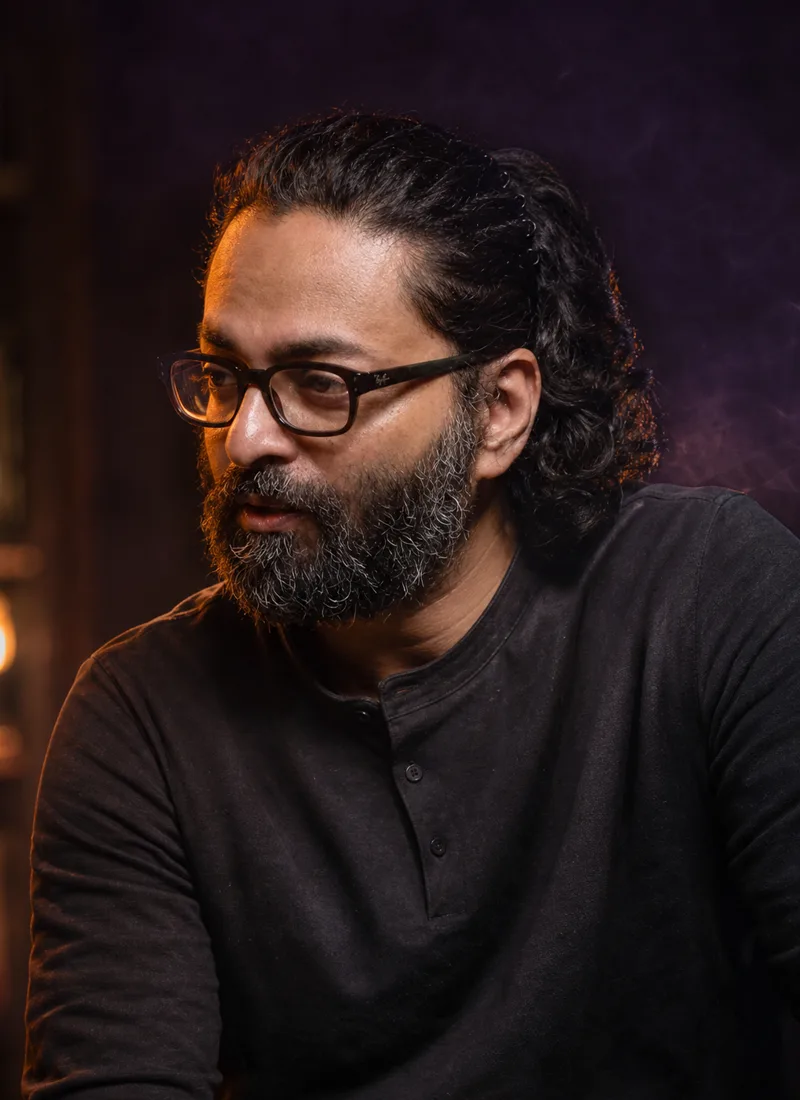
Arunava Khasnobis
In Soul Connection, Arunava looks at people, art, relationships, failure, moral tension and inner life through conversation. His essays are not episode summaries; they are honest returns to what was heard, tested against his own questions, experience and unfinished understanding.
CONTINUE READING