Soul Connection · cinema-craft
What if the work that made your name costs you your next role?
Raj Chakraborty’s published interviews open a practical question about casting: how can we test someone for unfamiliar work without letting either their reputation or our sympathy decide the result?

The photograph receives a verdict
Imagine a casting meeting in which a photograph receives its verdict before the scene is discussed. Everyone recognises the actor. Someone remembers the songs, someone the comic entrances, and someone says the audience will never accept that face in this part. Nothing has yet been said about the character's habits, the relationship at the centre of the scene, or what a short screen test might reveal. The work that made the performer recognisable has become the reason to exclude them. Familiarity has supplied an answer to a question that has barely been asked.
This imagined meeting is the problem examined here: when does a useful professional reputation become a restriction on the next assignment? In a 2019 Indulge interview, Raj Chakraborty challenged assumptions about mainstream performers' acting ability. Speaking to OTTplay in 2023, he described wanting to give actors associated with commercial films opportunities to show another side of their ability. These are the limited attributed claims behind this essay. What follows is an editorial examination of casting and judgment, not a reconstruction of his Soul Connection conversation. Its practical concern is how to offer a fair test while preserving the right to reject a performance that does not work.
Give the new role its own test
Name the work you have actually seen.
Identify what the new role still needs tested.
An opportunity to try is not a promise of selection.
The missing performance is not proof of missing ability
Past work should count. If an actor repeatedly rushes a difficult exchange, a director has a reason to investigate that habit. If a role needs an unfamiliar speech pattern, preparation time matters. But evidence has boundaries. Having watched someone succeed at comedy does not tell us how they will handle restrained anger. We may have seen no evidence of that ability because the previous roles never called for it. The absence belongs first to our experience of the performer; turning it into a settled description of their limits requires another argument.
A useful casting note would therefore separate observation from prediction. Instead of writing that an actor is the wrong type, it could identify a specific concern: a delivery pattern, a physical habit, a difficulty sustaining attention while another person speaks. Each concern suggests something that can be examined. Professional experience still matters, but now it generates a question rather than closing the file. A director can remain sceptical without pretending that the test has already happened.
What the second attempt can tell us
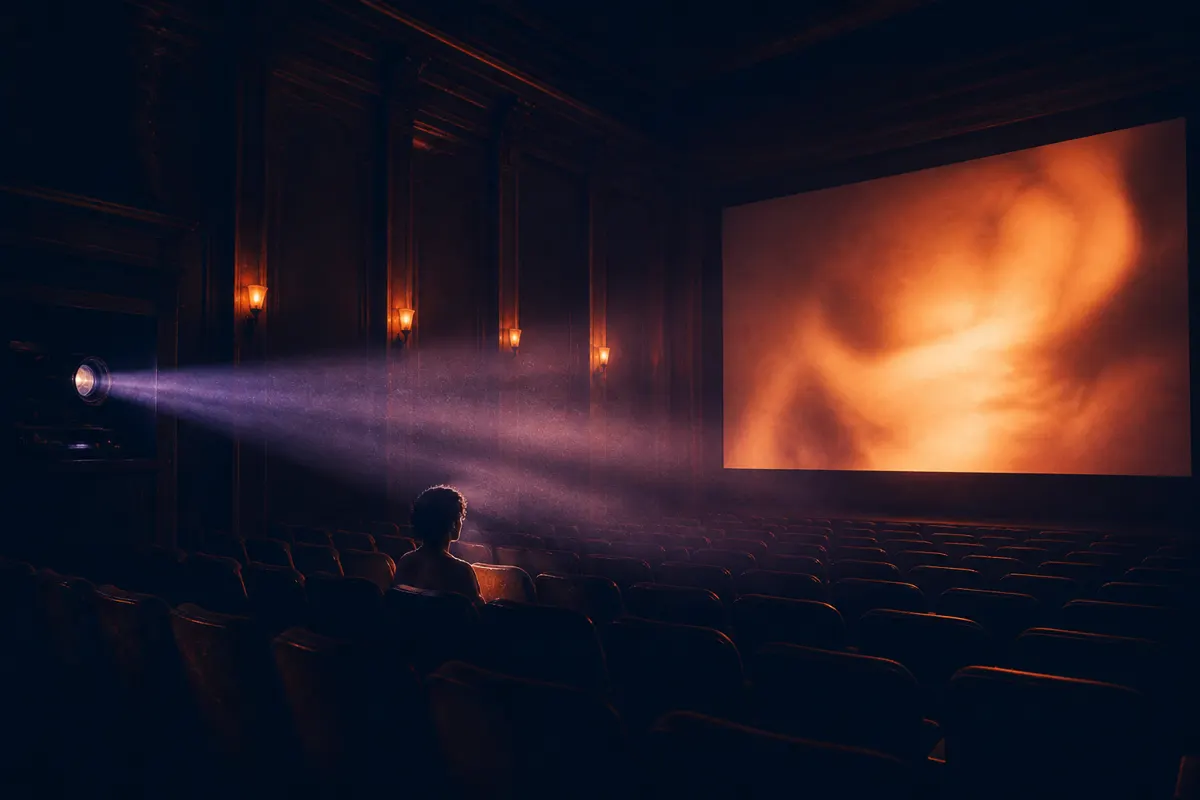
Consider an invented audition scene in which a parent scolds a child while trying to conceal fear. The first reading may contain only anger. A simple direction, asking the performer to look at the child before the final line, might produce a different relationship. The first attempt and the response to direction provide different information. Neither guarantees a successful performance in the finished film. Together, however, they can reveal more than a single reading treated as an irreversible disclosure of talent.
The conditions of the attempt also belong in the judgment. One candidate may have had time with the scene while another receives it at the door. One may hear the partner's lines clearly while another must imagine them. These differences need not invalidate every decision, but ignoring them allows a production's arrangements to masquerade as an actor's limitations. A short test can still acknowledge what it did not establish. That is more credible than claiming certainty from an uneven comparison.
There are limits to this generosity. An audition cannot become an indefinite training programme, and a production may not have the time a performer needs. The honest conclusion might be that the preparation required is impossible for this schedule. That is narrower than saying people with this background cannot do this kind of work. It also leaves a usable record. If the actor later succeeds in a comparable assignment, the earlier decision can be understood as a decision made under particular conditions, rather than defended forever as a discovery about the person.
A test also asks something of the candidate. Preparation takes time, and repeated invitations without a clear decision can become a burden rather than an opportunity. The production should know what uncertainty another reading is meant to resolve. If it cannot name that uncertainty, asking for one more performance may merely postpone a difficult choice. Fairness therefore includes knowing when enough evidence has been gathered. An actor need not keep auditioning until the people in the room feel comfortable abandoning an old impression; the room has work to do as well.
An opportunity should not become a trial of an entire career
An actor offered an unfamiliar part may also be handed a burden: prove everyone wrong. What sounds encouraging can make one performance stand for every performer associated with the same kind of cinema. A weak scene then risks being read as confirmation of an entire category's inadequacy. That is a peculiar form of opportunity. The door opens, but the old verdict waits beside it, ready to claim that the experiment should never have happened.
The alternative is to keep the unit of judgment small enough to be useful. One actor's strong work cannot establish another actor's ability, just as one failure cannot disqualify a whole background. Praise can name the pause, the change of attention, or the convincing relationship instead of merely announcing astonishment. Surprise may be the beginning of a viewer's response; it need not be the end. Once the initial surprise passes, the scene still has to sustain interest on its own terms.
The performer must also be allowed to value the work that made them familiar. Trying a different role need not require an apology for songs, comedy or popular success. If respect is conditional on disowning earlier work, the apparent invitation contains another demand for conformity. An artist may want a wider range without wanting a new identity to erase the old one. That choice belongs in the conversation too: are we offering another possibility, or insisting on a conversion before we will take the person seriously?
An invitation is not a guarantee of success
There is a serious objection to concentrating on the underestimated established actor: recognition also brings advantages. An unknown performer may struggle to enter the room at all. A familiar name can attract interest before any scene is tested. Defending that person's freedom to attempt unfamiliar work must not turn into an argument that they deserve every available opportunity. A casting process could ask both questions together: have we dismissed this familiar performer too quickly, and have we allowed anyone unfamiliar to become visible? Answering one does not settle the other. The photographs belong on the same table, even when the candidates arrive with very different histories.
Nor does a director's stated intention establish the quality of the resulting performance. Chakraborty's wish to provide opportunities remains an attributed intention; the relevant work still requires its own evaluation. A critic may find an actor unconvincing. The useful distinction is between identifying what fails within a scene and invoking a career label as if it explains the failure. Sympathy for an underestimated artist cannot require applause. If a carefully conducted test ends in rejection, that result is compatible with fair treatment. Without room for an honest no, an invitation to try becomes an empty ceremony, and the person receives protection rather than serious professional attention.
Put the photograph back on the table
The next casting announcement offers a modest way to examine our own habits. Record the first objection that comes to mind, then return to it after seeing the work. Did the particular difficulty appear on screen? Did a familiar mannerism interfere with the relationship? Or did the objection disappear once the character began to act? The exercise does not oblige anyone to enjoy a film. It asks whether dislike can be explained with greater accuracy. It can also make praise more useful: an account of a specific choice tells us more than surprise that a supposedly limited performer could act at all.
Back in the imagined meeting, the photograph returns to the table. The actor has not been awarded the role. Someone has simply replaced a verdict with a testable question: which part of this scene would tell us whether the performer can meet its demands? There may be too little time for the preparation required, or another candidate may do the work better. Those are decisions about this assignment. They need not become a permanent sentence on someone's range. The unresolved difficulty is how to keep that door open without letting recognised names occupy the entire doorway. A fairer casting conversation has to leave space for the person we think we know and the person we have not yet bothered to watch.
Specific takeaways
- 01
Distinguish an ability you have not seen from an ability that is absent.
- 02
Attach casting doubts to specific demands of the scene.
- 03
Observe both a first attempt and the response to direction.
- 04
Account for unequal preparation and audition conditions.
- 05
Do not make one performer represent an entire career category.
- 06
Allow new work without demanding an apology for earlier work.
- 07
Keep unfamiliar candidates in view while reconsidering familiar ones.
Questions for your own life
- What observed scene supports your doubt about an actor in an unfamiliar role?
- After a performance surprised you, could you identify the choices that worked?
- Can you support an actor's opportunity while criticising the resulting work?
- Who remains outside the room while familiar names are being reconsidered?
What if the work that made your name costs you your next role?
Watch the complete episode ↗
Arunava Khasnobis
In Soul Connection, Arunava looks at people, art, relationships, failure, moral tension and inner life through conversation. His essays are not episode summaries; they are honest returns to what was heard, tested against his own questions, experience and unfinished understanding.
CONTINUE READING