Soul Connection · cinema-craft
The character moved you. Did you notice what they wanted?
Drawing on Kaushik Ganguly’s published interviews, this essay offers a way to distinguish sympathy for a character from attention to their wishes, work and choices.
A moving face, an unfamiliar life
Imagine a film in which someone loses a job. They stand outside the workplace, unable to decide which way to turn. The music arrives before the tears do. We are moved. Later, describing the film to a friend, we can remember the injured face with extraordinary clarity. We cannot remember anything the person wanted before the dismissal, or anything they knew how to do. The film may have given us a powerful encounter with suffering. Has it also given us an encounter with a person? That distinction matters because feeling for someone can become a substitute for being curious about them.
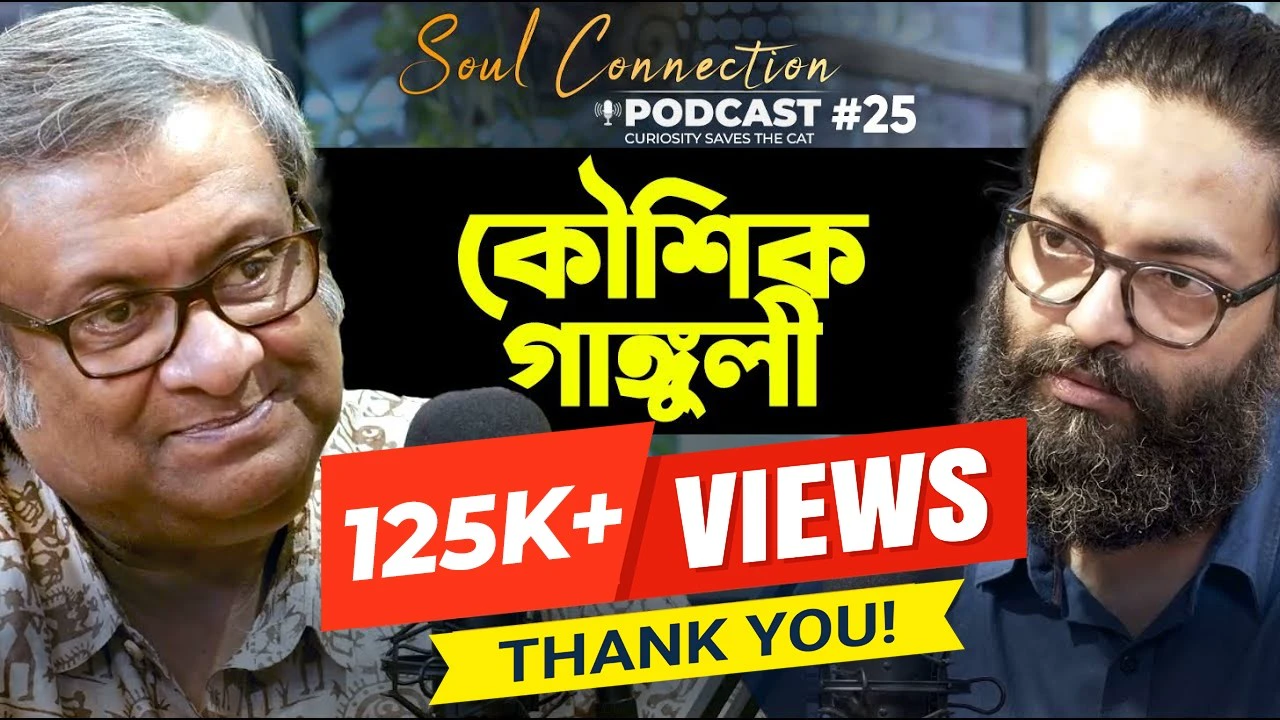
In a 2016 interview with Media India Group, Kaushik Ganguly spoke about making subjects out of small things that usually receive little attention. In Showli Chakraborty’s 2024 interview for The Space.Ink, he described a situation and its human consequences as possible foundations for a film. These are the limited, attributed starting points for this essay. The interpretation that follows is not a reconstruction of his Soul Connection conversation. It asks what a viewer might gain by looking beyond a character’s most painful circumstance. The opening scene is imagined, not a description of one of Ganguly’s films.
Look for a life beyond the injury
What does this person want for themselves?
Who or what limits their options?
What do they do within those limits?
The person who opens the door
A supporting character may appear only to let the protagonist into a building. The door opens, the important conversation begins, and the person who made it possible disappears. That economy is often necessary. Every figure cannot become the centre of the same film. But a small alteration can reveal that the person at the door has a destination too. Perhaps they are waiting to leave. Perhaps the visitor has interrupted something that will not wait. The scene acquires another clock without acquiring another speech.
Screen time alone does not settle the matter. A film can spend ten minutes on an unhappy face while allowing its owner no interests beyond being unhappy. A much shorter scene can show someone refusing an instruction, concealing a mistake or negotiating a favour. We may dislike the choice. At least there is a choice to consider. Attention has shifted from the visible condition to the person's conduct within it.
An unfamiliar profession or a neglected social position is therefore a starting point, not a certificate of sensitivity. Unfamiliarity can be displayed as a curiosity while ordinary desires remain unexamined. The viewer learns what makes someone unusual but not what would make tomorrow a tolerable day for them. The practical test is not whether a subject seems important. It is whether the treatment permits the person to want something that does not exist solely for our education.

What the hands knew before the loss
Suppose the film about a dismissal had first allowed us to see the person working. Not a montage that announces dedication, but a small problem solved through experience: a sound recognised, a tool found without looking, a younger colleague corrected without embarrassment. The later loss would then include the disappearance of somewhere to use that knowledge. Losing an income and losing a place for an acquired skill can belong to the same event without being the same experience.
This is an invented filmmaking possibility, not a rule about how every loss must be represented. It also needs a warning built into its logic. Nobody has to demonstrate exceptional usefulness to deserve a story. A person who cannot work is not less worthy of attention. Showing competence can nevertheless interrupt a one-way relationship in which we imagine ourselves as helpers and another person only as someone who needs help. In one particular task, the direction of dependence might be reversed.
Admiration for craft has its own trap. Beautiful images of devoted labour can make exhaustion look like proof of virtue. A worker's love for a task does not answer questions about rest, payment or humiliation. If a scene encourages us to admire the hands, we can still ask what conditions those hands return to when the scene ends. The purpose is not to remove beauty from work. It is to keep beauty from doing the work of an excuse.
Two people in a room, two different clocks
Consider another invented scene. A homeowner is on the phone while a person arriving to repair something waits at the door. Almost nothing happens, yet the arrangement has consequences. Who can leave without explanation? Who might lose the next appointment? Who is expected to apologise for taking time? A situation can make these differences visible without appointing a character to explain the social order. The waiting itself carries information, provided the film is interested in more than one person's schedule.
Now suppose the call concerns an emergency. The homeowner's distraction becomes understandable. The repairer's lost time does not become imaginary. Holding those facts together is harder than selecting a villain, but it gives the scene somewhere to move. A reason can revise a judgment without erasing a consequence. This is an editorial example of what attention to a situation might enable, not a scene attributed to Ganguly or a claim that he endorses this particular method.
Silence is equally uncertain. Someone may lack an opportunity to speak, fear the cost of speaking, or simply wish to keep something private. Treating every quiet face as an invitation to invent an inner monologue is another way of taking possession. A viewer sometimes needs to say: I noticed the pause, but I do not know what it meant. That admission protects the possibility of a later answer. It also leaves the character some space that our interpretation has not already occupied.
Sympathy cannot require innocence
There is a serious objection to this way of watching: perhaps it asks a film to provide a complete biography before it is allowed to move us. No film could meet that demand. A brief encounter can be ethically and dramatically sufficient. A character with few choices may also be an accurate portrayal of severe constraint. Insisting that everyone must take a bold decision before the closing credits would replace one simplification with another. The useful distinction is between a story that notices a person's restricted options and a story that never asks whether they have any wishes. They may look similar in a plot summary, yet feel very different on screen.
Nor should music or a close-up be treated as evidence of dishonesty. Cinema works through form; an emotional response is not a failed examination in critical thinking. The question is where that response leads. Does it return us to the person's predicament, or let us rest in a flattering picture of our own compassion? There is another difficulty: the injured person might behave badly. Understanding their loss does not require excusing the harm they cause. Allowing both facts to remain visible gives a character more room than making them innocent enough to deserve help. A viewer can resist an action while refusing to reduce its author to that action.
Stay interested after the tears
After your next film, choose one scene rather than issuing a verdict on the entire work. Ask what the less powerful person wanted, what prevented it, and what they did. Separate what appeared on screen from what you supplied. If another viewer answers differently, compare the actual moments that led you there. This is not a scoring system for morally approved cinema. It is a way of making a conversation more exact. For a writer, a related experiment is to give a supporting character an appointment or task unrelated to the protagonist. You may never show it. Knowing it can still alter when that character leaves a room.
Return to the person outside the workplace. We need not withdraw our sadness. We can ask what they will do next without demanding that their next move reassure us. They might make a call, look for another job, or go home without mentioning the dismissal. There is no obligation to reward our sympathy with courage. A film that leaves room for that uncertainty lets a life continue beyond the emotional service it has performed for its audience. The question at the exit is smaller than whether cinema makes us better people: when this particular person stopped making us cry, were we still willing to watch?
Specific takeaways
- 01
Look for a wish beyond the circumstance that makes a character suffer.
- 02
Notice choices as well as minutes of screen time.
- 03
Recognise skill without making usefulness a condition of human worth.
- 04
Ask whose time and options are constrained within a scene.
- 05
Let a reason revise judgment without cancelling consequences.
- 06
Distinguish understanding a person from endorsing an action.
- 07
Separate observed details from the inner life you have imagined.
Questions for your own life
- What did the last character who moved you want for themselves?
- Has admiration for someone’s work ever stopped you asking about its conditions?
- How much of a silent character’s inner life did you actually see?
- Can you object to a character’s conduct without losing interest in their predicament?
The character moved you. Did you notice what they wanted?
Watch the complete episode ↗
Arunava Khasnobis
In Soul Connection, Arunava looks at people, art, relationships, failure, moral tension and inner life through conversation. His essays are not episode summaries; they are honest returns to what was heard, tested against his own questions, experience and unfinished understanding.
CONTINUE READING