Soul Connection · Cinema · Motherhood · Everyday autonomy
Mum Can Go Out. Why Must She Still Make Dinner First?
Ananya Chatterjee’s discussion of Annapurna opens a household question: are we making room for a mother’s choices, or merely fitting them around our convenience? A practical way to distinguish care from permission and control.

Permission is not the same as having time
Imagine a mother preparing to meet friends. Nobody objects. Someone asks whether she can leave dinner ready. Someone else needs a prescription collected on her way home. She is asked twice when she will return. The family is pleased that she is finally doing something for herself. Yet she has had to compress an ordinary evening’s work into the hours before leaving. Everyone else’s timetable remains intact. Her outing has been approved; its cost has been transferred back to her. This is an imagined household, not a recollection from Ananya Chatterjee’s life. Its usefulness lies in a small distinction: being allowed to leave is not necessarily the same as having time that belongs to you.
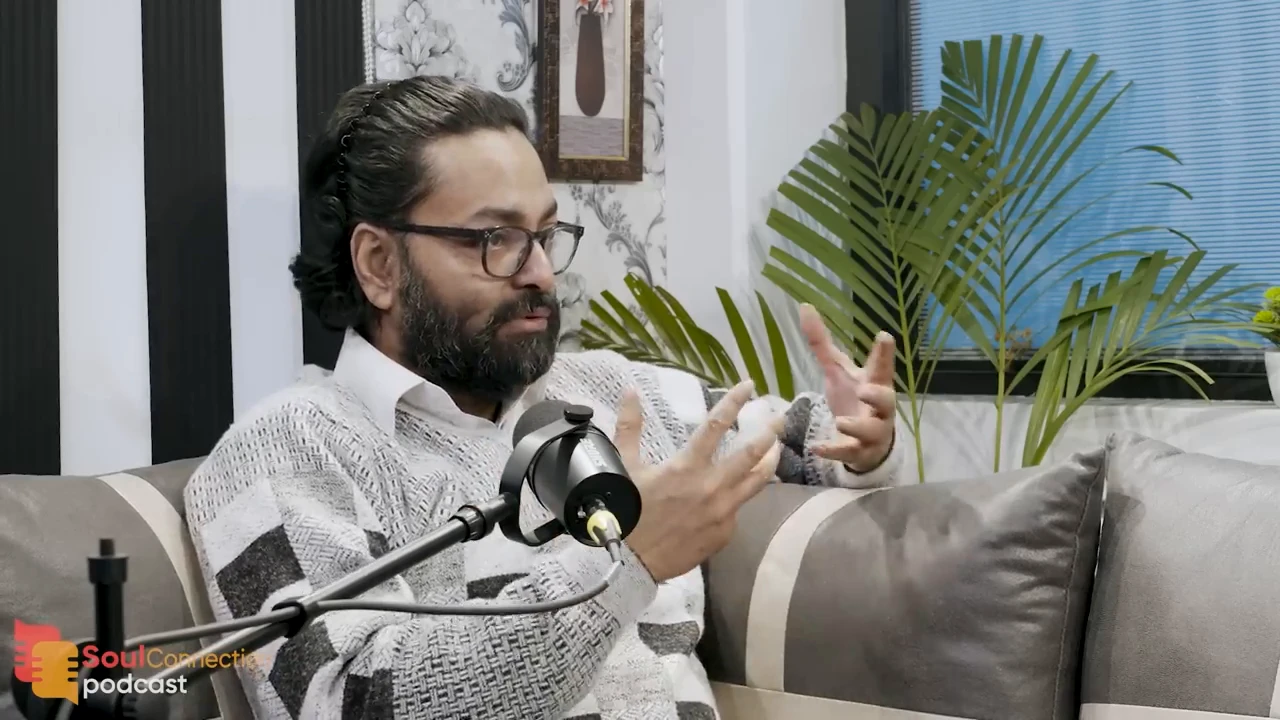
Ananya’s Soul Connection conversation, particularly its discussion of Annapurna, opens this question of a mother’s identity beyond service to others. A separate RadioBanglaNet report from 28 March 2025 records her concern for mothers’ own dreams and identity. That corroborates the central theme, not every personal story in the episode. This essay does not review a film it has not established through viewing. It follows the theme into an ordinary arrangement: who changes their plans when a mother changes hers? We can answer that without deciding that a family is either loving or cruel. Each request in the imagined evening may be reasonable. Medication and food matter. The imbalance appears when every reasonable request lands with the same person. The practical question is what the rest of us will take responsibility for, not which attractive leisure activity we will recommend to her next.
Where does permission become a real choice?
Ask what she wants before arranging an activity.
Agree who owns the work while she is away.
Her time remains hers even if she declines your suggestion.
The trouble with putting her on a pedestal
There is a kind of praise that leaves a person very little room to move. A mother is celebrated for never needing rest, never losing patience and never putting herself first. When she does need something, the request feels like a departure from the person the family knows. The praise was apparently unconditional. In practice, it depended on her continuing to require very little. This is not an argument against gratitude. It is an argument against making gratitude conditional on somebody remaining endlessly available.
In Bidisha Chatterjee’s separate Sangbad Pratidin interview, Ananya objects to the pressure created by treating human beings as godlike, in response to a question about idealised mothers on screen. That position is attributed here to that interview, not presented as a recovered quotation from this episode. It makes a useful distinction possible: a person can be a loving mother without being infallible. An evening alone does not cancel years of care. Neither does an ordinary mistake prove the failure of her entire identity.
Accountability still matters. If somebody’s action harms another person, it should be discussed. But are comparable mistakes being judged comparably? A father’s absence might be treated as a scheduling problem while a mother’s becomes a judgment on her character. That is not true of every family. Where it is true, affection alone will not resolve it. Even soothing her anger can become a way of avoiding its content. She may not be asking to be reassured that everyone loves her. She may be asking for a different division of work.

The task that follows her through the phone
Cooking dinner is visible. Remembering what has run out, deciding what everyone can eat and arranging a replacement when help is unavailable are easier to overlook. A person can leave the kitchen while remaining responsible for its operation. If a volunteer calls every few minutes to ask where things are and what should happen next, the hands have changed but the responsibility has not entirely moved. The outing now contains a remote shift at home.
This is the difference between assisting and taking ownership. Assistance can leave one permanent manager in charge of deciding, reminding and rescuing. Ownership includes thinking through what must happen and dealing with ordinary mistakes. Nobody knows everything at the beginning. Learning is part of accepting the task. Unfamiliarity should not become a lifetime exemption, especially when the previous owner had to learn without being granted that exemption herself.
It can also be hard for the long-standing organiser to step back. Someone else will do things differently. The first result may be imperfect. Calling her controlling when she intervenes will not automatically create trust. Trust develops through repeated evidence that the work will actually be finished and that she will not inherit the aftermath. These questions extend beyond mothers to anyone carrying an unequal share of care. Starting with a mother’s position should make other overlooked caregivers more visible, not establish a competition over who deserves recognition most.
Do not give her a new timetable for being happy
Once a little time has been freed, a new temptation appears. We can fill it for her. Classes are booked, trips proposed, a former hobby revived. When she seems reluctant, the organiser feels hurt. So much effort has been made; why is she not grateful? Care has quietly acquired a preferred outcome. She is free to enjoy herself, provided she enjoys the life we have designed.
Asking about earlier interests can open a conversation. It does not establish an obligation to resume them. What somebody wanted twenty years ago may no longer appeal. She may want something new, or simply a pause. Rest does not need to become a course in self-improvement before it counts as a legitimate use of time. A useful test is whether the space remains available after she rejects our suggestion. If it disappears, the offer was narrower than it sounded.
Encouragement still has a place. Help with travel, forms or the cost of an activity can make a choice possible. The distinction concerns who decides what that help is for. A mutually agreed check-in can be considerate; repeated demands for location and explanations can feel like supervision. Families have different practical safety needs, so no single rule about phone calls will fit all of them. What matters is whether the arrangement has been discussed with the person concerned, and whether she can question it without being accused of rejecting love itself.
The work does not disappear when she leaves
There is a serious objection to this argument. Some households have little money and no spare pair of hands. Someone may require sustained care. An adult child may already be combining paid work with substantial responsibilities at home. A mother may also want to retain a task that others believe she should relinquish. Telling these people simply to choose themselves can be both empty and unkind. The work will not disappear because we have found better words for freedom. Before judging an arrangement, we need to distinguish an actual shortage of support from an unquestioned preference for one person’s convenience. Those situations can look similar from outside, but they require different responses.
Nor does recognising a mother’s personhood require an adult child to erase every boundary. Some family relationships are harmful; distance may be necessary. Turning gratitude into a permanent debt merely passes the demand for self-sacrifice to the next generation. A workable arrangement has to recognise more than one person’s limits. Where substantial redistribution is not immediately possible, perhaps a predictable break or a modest change of duties is. Where even that is difficult, the difficulty should be named honestly rather than explained as somebody’s selfishness. This essay offers questions for a negotiation, not a universal allocation of hours. The people doing the care must be able to say when a supposedly generous solution has created an unbearable new burden.
What changes while she is out?
Try beginning with one recurring responsibility rather than a programme to transform a parent’s life. Decide what the responsibility includes, who will handle it, and when genuine help will be needed. Then leave the newly available time unassigned. She might visit somebody, watch something, sleep, or do nothing that produces an impressive story afterwards. An arrangement that requires her to demonstrate happiness is another assignment. After a little time, ask whether the change actually helped. The answer may disappoint the organiser. Perhaps the chosen task was not the main burden. Perhaps doing the task was enjoyable, while arranging everything around it was exhausting. Listening becomes real when that answer can alter the plan.
What remains useful from Ananya’s discussion is the invitation to notice a mother as the subject of a life, rather than only as a necessary character in somebody else’s. The household analysis here is an editorial extension of that theme, not personal advice attributed to her. Return to the imagined evening. Dinner is somebody else’s responsibility now, including clearing up. She will not have to repair the kitchen on returning. Nobody needs proof that the outing was worthwhile. It may inconvenience the family a little. The unresolved question is why her freedom should have to arrive without inconveniencing anybody at all. The answer will be found in what the household does while she is out, not in how warmly it waves goodbye.
Specific takeaways
- 01
Check whether an outing increases her work before or afterwards; permission alone does not measure freedom.
- 02
Share planning and follow-through, not only the visible part of a household task.
- 03
Listen for a requested change inside a complaint instead of treating every complaint as a need for reassurance.
- 04
Ask about former interests without requiring her to resume them or acquire a new skill.
- 05
Agree practical support and communication together so that care does not become supervision.
- 06
Recognise financial, caregiving and relationship limits; do not transfer compulsory self-sacrifice to somebody else.
- 07
Ask whether the new arrangement helped and revise the division of responsibility accordingly.
Questions for your own life
- Which responsibility still follows her through the phone when she leaves home?
- How would you react if she declined the leisure activity you chose for her?
- Whose evening away is treated as ordinary, and whose requires advance justification?
- Which of your own routines could change to make her time genuinely available?
Mum Can Go Out. Why Must She Still Make Dinner First?
Watch the complete episode ↗
Arunava Khasnobis
In Soul Connection, Arunava looks at people, art, relationships, failure, moral tension and inner life through conversation. His essays are not episode summaries; they are honest returns to what was heard, tested against his own questions, experience and unfinished understanding.
CONTINUE READING